Engineering around the crushing season
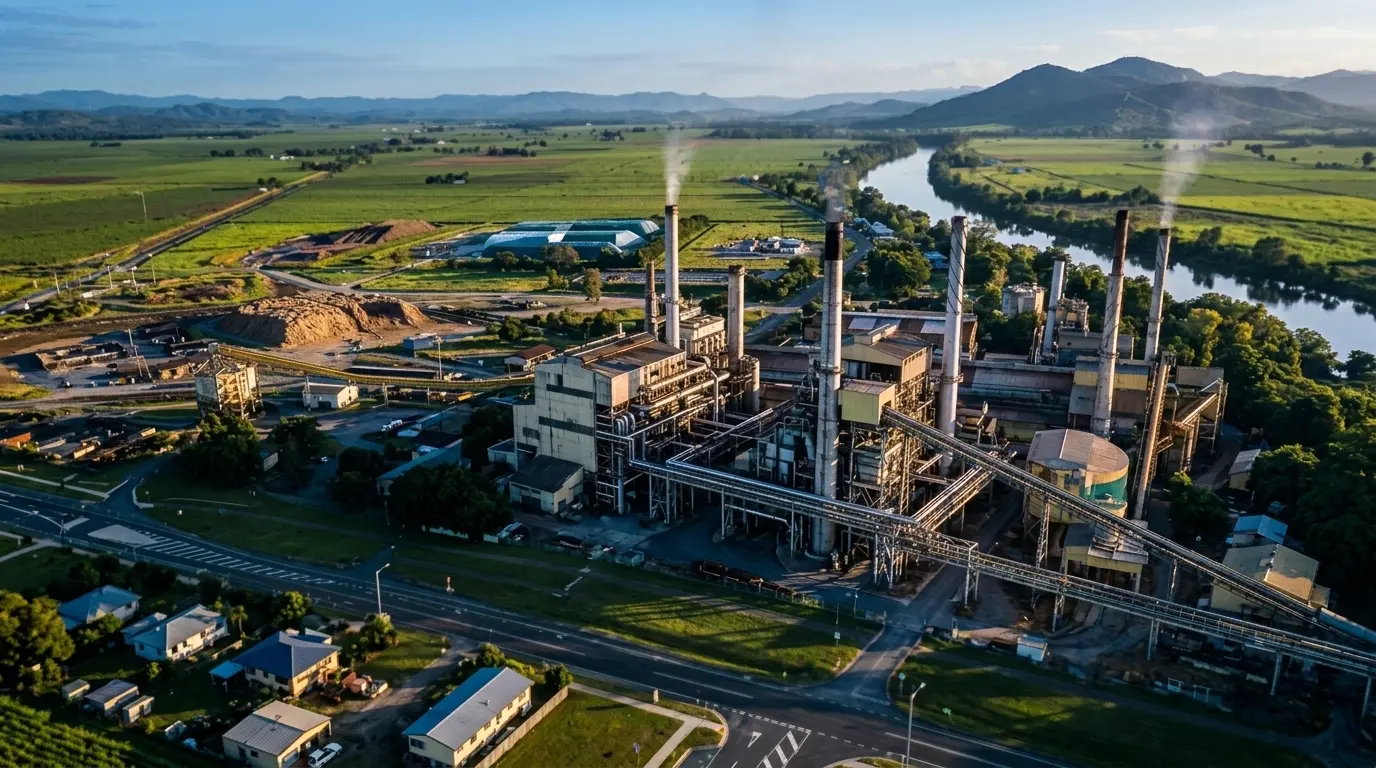
Sugar milling across Queensland runs from approximately June to November. During that window, electrical and automation systems have to work. A fault on the juice extraction train, the evaporator station, or the boiler plant has an immediate impact on throughput - and the pressure to get back online quickly falls on the electrical and automation team.
The systems keeping a sugar mill running are often a mix of ages and technologies, progressively upgraded over decades of crushing seasons. Documentation is frequently incomplete. Control logic has been modified in the field. Understanding how it all fits together takes time that a fault call at 2am does not allow.
Our electrical and automation engineers work regularly in sugar mill environments. We know the systems, the interdependencies, and the operational priorities that drive decision-making during crushing.
What we do in sugar mills
Our sugar mill work covers the full range of electrical and automation engineering. PLC programming and upgrades across mill plant - juice extraction, clarification, evaporation, crystallisation, centrifugals, and boiler controls. SCADA systems for mill-wide visibility and alarm management. Electrical design and RPEQ engineering for switchroom modifications, motor control centre upgrades, and new equipment installations.
The inter-season shutdown is the main window for significant work. We scope and plan ahead so that control system upgrades, switchboard replacements, and new automation installations are designed, procured, and ready to execute within the available outage window - and commissioned and tested before the following crushing season begins.
During crushing we respond to faults and support minor modifications where they are necessary and can be managed without disrupting production. We work closely with mill electrical staff and keep communication clear so the right decisions get made quickly.
Unique capability
Real-time AEMO power price integration
Sugar mills are large energy users with significant spot price exposure. We integrate live AEMO electricity spot price data directly into mill control systems - enabling automated load shedding and demand response that responds to price signals in seconds, not minutes. Cogeneration plant, large drive loads, and process equipment with inherent buffer are all candidates for price-responsive automation.
Learn about real-time power price integration →Control systems and platforms
Rockwell Automation ControlLogix and CompactLogix are common across newer installations and recently upgraded plant. Older systems include GE Series 90 and Emerson PACSystems, Schneider Modicon, and legacy proprietary mill control systems that have been in service since before modern PLC platforms were standard.
AVEVA System Platform and Ignition are the SCADA platforms we see most frequently across mill-wide monitoring systems, historian, and reporting.
We work across all of these without requiring a vendor service call - fault diagnosis, program modification, hardware replacement, and migration to new platforms are all within our standard scope.
SCADA server virtualisation
Sugar mills commonly run SCADA and historian systems on ageing physical servers - often legacy Windows installations that have not been patched or replaced in years because the SCADA software vendor has not validated newer operating system versions. These servers are a reliability risk. When the hardware fails, getting the SCADA system back online can take days or weeks if compatible replacement hardware is unavailable or the original software media and licence keys are lost.
Server virtualisation addresses this directly. Moving the SCADA application from a physical server to a virtualised environment on modern hardware provides several practical benefits - hardware independence so the virtual machine can be restored to any compatible host, snapshot capability for pre-upgrade backups, easier disaster recovery, and the ability to run a legacy operating system in an isolated VM without exposing it to broader network risk.
We scope and implement SCADA server virtualisation for sugar mill operations, working through the application inventory, vendor compatibility requirements, network architecture implications, and migration approach with mill IT and engineering teams. For mills with AVEVA System Platform or Ignition historian on ageing physical hardware, virtualisation is often a lower-risk and lower-cost path than a full SCADA platform migration.
Working within sugar industry requirements
Electrical engineering on sugar mill sites operates under Queensland electrical safety legislation and the specific safety requirements that come with high-voltage switchgear, large motor drives, boiler plant, and rotating equipment. RPEQ engineering packages are required for significant electrical modifications and new installations. Our documentation meets the standard expected by sugar industry principal contractors and mill management.